
What Anxiety Can Look Like in Kids Ages 6–12 (It’s Not Always Worrying)
When you think of anxiety, you may imagine a child who talks openly about feeling nervous. But for many kids, anxiety shows up in ways that are much easier to miss — or misunderstand.
In elementary and middle school-aged children, anxiety can look like irritability, perfectionism, avoidance, stomachaches, meltdowns, trouble sleeping, or becoming unusually clingy. Sometimes it looks more like frustration than fear.
During Mental Health Awareness Month, it’s worth remembering: kids don’t always have the language to explain what they’re feeling internally. Their behavior is often the clue.
Anxiety Can Show Up as “Big Reactions”
Have you ever wondered why your child melts down over what seems like a small problem?
An anxious child may:
- Cry easily when plans change
- Become overwhelmed by homework
- Lash out after school
- Refuse to try new things
- Get stuck on mistakes
- Need constant reassurance
From the outside, these behaviors can look dramatic or defiant. Underneath, a child may be feeling pressure, uncertainty, or fear they can’t fully explain.
Perfectionism Is Often Anxiety in Disguise
Not all anxious kids seem fearful.
Some become extremely focused on getting everything “right.” They may erase homework repeatedly, panic over small mistakes, avoid activities they aren’t immediately good at, or seem very hard on themselves.
These kids are often praised for being responsible or high-achieving — but internally, they may be carrying a lot of stress.
Physical Symptoms Are Real
Anxiety doesn’t only affect emotions — it affects the body, too.
Children with anxiety often complain about:
- Stomachaches and headaches
- Trouble sleeping or frequent nightmares
- Fatigue and low energy
- Feeling sick before school or activities
Anxiety can also show up through behaviors like:
- Nail biting or skin picking
- Hair twirling or hair pulling
- Fidgeting or restlessness
- Clinginess or difficulty separating from caregivers
- Frequent reassurance-seeking (“Are you sure I’ll be okay?”)
These behaviors are often the body’s way of releasing tension or self-soothing when a child doesn’t yet have the language or tools to manage stress.
These symptoms are real, even when there isn’t a medical illness causing them. A stressed nervous system can create very physical reactions — especially in children, whose bodies often “speak” before their words do.
If you notice patterns that consistently show up around school, transitions, social situations, or new experiences, it may be worth paying closer attention to what your child’s behavior is communicating.
After-School Meltdowns Can Be a Sign
Many children work incredibly hard to hold themselves together during the school day.
By the time they get home, they’re exhausted emotionally. That’s why some kids seem fine at school but fall apart at home.
Instead of jumping straight into questions or corrections, it can help to build in a decompression routine:
- snack first
- quiet time
- movement outdoors
- music, drawing, or reading
- connection without pressure to talk
Sometimes kids need to regulate before they can communicate.
What Parents Can Do
The American Academy of Pediatrics says “Engaging, not avoiding, is key to the management of anxiety disorders.”
Parents don’t need to eliminate every stressor to support their child’s mental health. Natutally, confidence grows when kids learn they can handle hard feelings and move through challenges successfully.
A few ways to help:
- Validate feelings first
Instead of:
- “You’re fine.”
- “Don’t worry about it.”
Try:
- “That sounds really stressful.”
- “I can see this feels hard right now.”
Feeling understood helps children feel safe.
- Praise effort, not outcome
Effort, flexibility, and persistence are the important traits that facilitate better outcomes.
Instead of:
- “How great — your team won!”
- “Why did you get a D on your homework?”
- “Practice makes perfect.”
Try:
- “I’m proud of how you kept going.”
- “Mistakes help us learn.”
- “You don’t have to do it perfectly to do it well.”
- Avoid rescuing too quickly
It’s natural to want to fix things immediately. But when adults solve every discomfort, kids can start to believe they can’t handle challenges themselves. Support them through the feeling instead of removing every obstacle.
Instead:
- Connect before you correct: “I can see why that feels stressful.”
- Offer support rather than solution: “I’m here for you. Let’s think it through.”
- Coach rather than carry: “What’s one small step you could try first that might help?”
- Teach coping skills
Simple tools can make a big difference:
- Deep breathing
- Movement
- Predictable routines
- Breaks from overstimulation
- Talking through worries
- Practicing flexible thinking
- Challenge unhelpful thinking
Invite your child to talk through the thoughts that are making them feel anxious or stuck. For example, a child might say something like, “If I don’t sit with my friends at lunch, I’m going to end up alone and everyone will think I’m weird.”
Once you understand the thought, the goal isn’t to shut it down—it’s to gently help your child examine it.
You might ask questions like:
- “Has something like that actually happened before?”
- “Are there other possible reasons your friends might not sit with you today?”
- “What usually happens on most school days when you’re worried about this?”
These kinds of questions help kids slow down and look at the full picture instead of treating a fear like a fact.
Over time, children start to build their own balanced thoughts, such as:
- “I might not sit with my usual group today, but I’ll still be okay.”
- “Even if I feel left out for a bit, it doesn’t mean I’m alone.”
The goal isn’t to swing into overly positive thinking. It’s to land somewhere realistic, steady, and believable.
- Support growth through everyday experiences
One of the most powerful ways kids build emotional resilience is through real-life experiences — not just conversations about feelings. Activities like creative workshops, group classes, camps, and hands-on enrichment programs give children a safe space to try new things, meet peers, and work through small moments of discomfort in a supported way.
Research on child development consistently shows that social connection, structured play, and opportunities for self-efficacy are key protective factors in emotional resilience and anxiety reduction.
These experiences aren’t about “fixing anxiety.” They’re about helping kids practice confidence, flexibility, and connection in everyday settings — skills that are closely tied to emotional wellbeing over time.
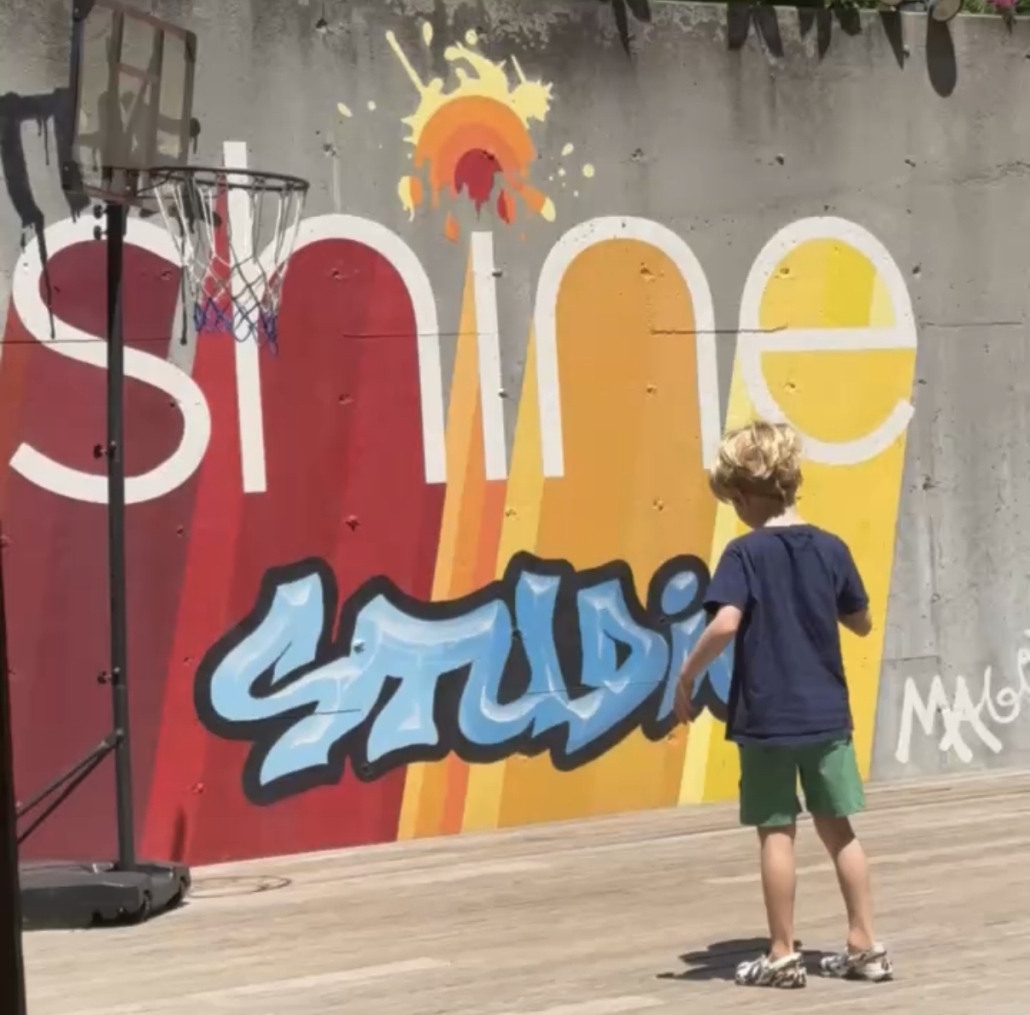
Programs like Shine, which center creativity, exploration, and group connection, can offer kids these kinds of growth experiences in a positive, encouraging environment.
When to Reach Out for Support
All kids feel anxious sometimes. But if anxiety is consistently getting in the way of sleep, school, friendships, family life, or everyday activities, it may be time to bring in extra support.
For many children, the first and most effective step is Cognitive Behavioral Therapy (CBT). CBT helps kids understand how anxiety works, recognize unhelpful thought patterns, and build practical coping skills they can use in real situations. It’s often the starting point for mild to moderate anxiety, especially when a child is still able to function day to day but is clearly struggling internally.
If anxiety is more intense—such as frequent school refusal, severe avoidance, panic symptoms, or significant disruption across multiple areas of life—clinicians may consider adding medication, usually an SSRI, alongside therapy. Medication isn’t a replacement for skill-building, but in some cases it can reduce the intensity of symptoms enough for a child to better engage in CBT and use the tools they’re learning.
The earlier children learn emotional coping skills, the more prepared they are to handle stress, uncertainty, and challenges as they grow. And when needed, treatment doesn’t have to be either/or—it can be a thoughtful combination of therapy, skill-building, and, in some cases, medication support.
Most importantly, kids need to know that struggling with anxiety is not something to feel ashamed of. With the right support, understanding, and tools, children can build resilience, confidence, and emotional strength over time.

