
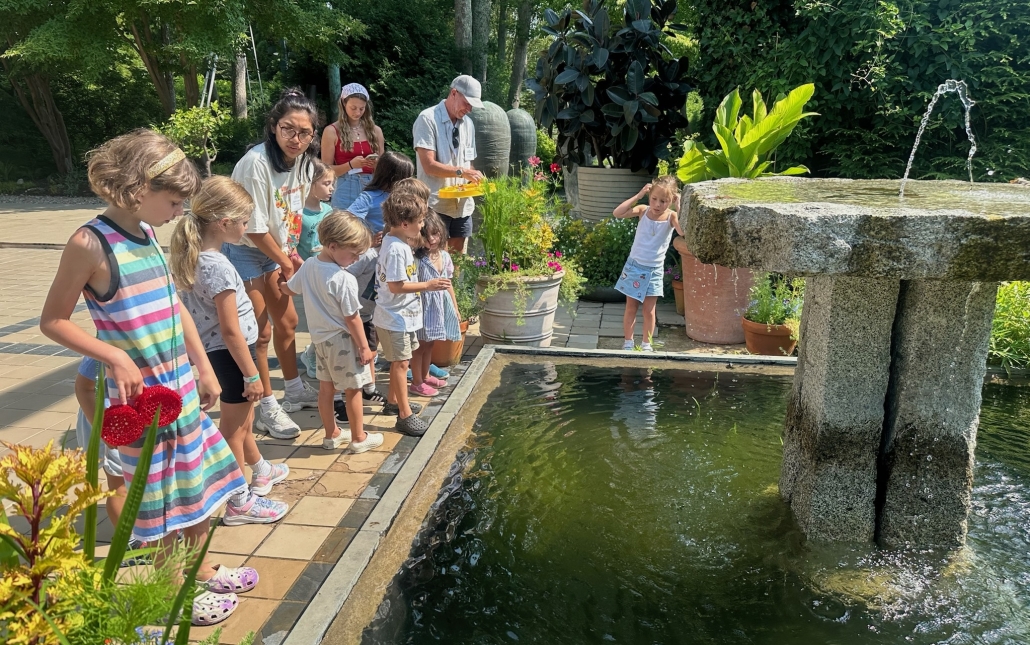
Summer Boredom and New Experiences Help Kids Grow
Summer is a season of possibility. Without the structure of school days, children have more time to explore, imagine, and discover what interests them. But for many parents, those long summer days can come with a familiar phrase: “I’m bored!”
You remember it all too well. Maybe it was staring through your grandmother’s glass doorknobs, lying in the grass weaving daisy chains, or floating lazily on a pool raft deciding whether to pretend you were a dolphin or Jacques Cousteau exploring the ocean depths.
Those quiet, unhurried moments weren’t wasted time — they were where imagination took over. While it may be tempting to fill every summer day with planned activities, some of childhood’s best memories come from the moments we don’t plan. Long before tablets and streaming TV, kids made up stories, invented games, and turned ordinary afternoons into adventures.
It may look like “just playing,” but there’s a lot happening behind the scenes. The American Academy of Pediatrics notes that when children invent games, negotiate rules, and solve problems on their own, they’re building executive function skills that help with planning, decision-making, self-control, and flexible thinking.
Boredom Builds Creativity and Independence
When children say they’re bored, they’re often looking for something to spark their curiosity.
Your first instinct might be to jump in with ideas: “How about Legos? Want to bake cookies? Go ride your bike!”
But sometimes the best response is simply, “Hmm… I wonder what you’ll come up with.” That little pause gives kids ownership over solving their own boredom.
Without an adult immediately providing an answer or an activity, kids learn to ask questions, experiment, and come up with their own ideas. Boredom doesn’t mean doing nothing. It means giving kids the space to think, explore, and create.
A cardboard box can become a spaceship. A backyard can become an outdoor laboratory. One child might spend an hour building a fairy village from sticks and leaves. Another might invent an obstacle course in the backyard or turn couch cushions into a pirate ship. The activity itself isn’t the goal — the thinking behind it is.
These moments help children develop problem-solving skills and independence. Younger children may practice making choices and using their imagination through pretend play, while older children may discover new hobbies, create projects, or find new ways to spend their time.
Space for Screen-Free Moments Sparks Imagination
Not every child will magically invent an elaborate backyard adventure five minutes after declaring they’re bored. Sometimes boredom looks exactly like… well, boredom. They may wander around the house, sigh dramatically, or flop across the couch for a while. That’s okay. Creativity often needs a little space before it shows up.
Creating room for boredom doesn’t mean eliminating screens completely or expecting kids to entertain themselves all day. It’s about building in pockets of time where imagination has a chance to take the lead.
Try starting a simple summer tradition, like a “no screens before noon” rule, where mornings are reserved for bike rides, backyard adventures, reading, crafts, or helping with a family project. Plan a screen-free playdate where kids can build a fort, create an obstacle course, put on a backyard performance, or invent a new game together. Even a night spent camping in the backyard — with flashlights, sleeping bags, and stories under the stars — can turn an ordinary evening into a memorable adventure.
The goal isn’t to fill every minute. It’s to give kids enough space to wonder what’s next.
New Experiences Help Kids Find Their Confidence
While unstructured time is valuable, summer is also a wonderful opportunity for children to try something new. A camp, class, or creative program introduces kids to new environments where they can explore interests alongside other children.
For some kids, making friends comes naturally. They bond over simple joys like sharing paint, a silly board game, or discovering that someone else also loves bugs, dinosaurs, and Taylor Swift.
For others, it takes time and a little encouragement. Being part of a group activity gives children a chance to practice important social skills: introducing themselves, working together, sharing ideas, and celebrating each other’s successes.
Trying something new can also help children discover strengths they didn’t know they had. A child who is hesitant to join a group might find confidence through an art project, a science experiment, a game, or a team challenge. Small moments of success can build confidence that carries into the classroom and beyond.
Helping Kids Make Friends Through Shared Experiences
Friendships often begin when children have something in common. Summer activities create natural opportunities for connection because kids are learning, playing, and creating together.
Whether they’re building something side by side, collaborating on a project, or laughing through a new experience, children learn that friendships grow through shared moments. They practice listening, communicating, and understanding different personalities.
For younger children, these experiences may be the first steps toward cooperative play and forming friendships outside their family circle. For older children, they offer a chance to meet peers with similar interests and develop a stronger sense of belonging.
The goal isn’t for every child to come home with a new best friend. It’s about helping kids feel comfortable being themselves, trying new things, and connecting with others.
Creating a Summer Full of Discovery
The best summer memories aren’t always the ones that come from a perfectly planned schedule. They often come from a balance of freedom and opportunity — time to wonder, time to create, and time to experience something new.
Give kids room to be bored. Give them chances to explore. Encourage them to try activities where they can meet new friends and discover what they love.
Because sometimes a quiet afternoon leads to a big idea. And sometimes one new experience is all it takes for a child to feel a little more confident, curious, and connected.

