
Why January Feels So Hard for Parents and How to Reset Without Reinvention
January has a reputation for clarity. A clean calendar. A fresh start. A sense that — finally — you can catch your breath and approach life with more intention.
But for many parents, the pace shifts in January. Tempers feel shorter. Kids seem restless, overstimulated, or resistant to the simplest requests. You may find yourself pushing through the days rather than savoring them — or feeling ready to move forward.
If that sounds familiar, there’s nothing wrong with you — and nothing broken about your family. January is a harder month than we give it credit for. It’s a season of recalibration, asking us to settle back in, reconnect with structure, and rediscover steadiness after a stretch of life that was full-on, in every sense of the word.
The Emotional Aftermath No One Talks About
Even when it’s joyful, December is full. Schedules are disrupted, routines loosen, emotions run high, and expectations — both internal and external — are everywhere.
January arrives immediately afterward and asks us to reset without rest.
Parents are expected to return to structure, productivity, and patience just as energy dips. Kids are expected to head back to school with focus, emotional regulation, and cooperation after weeks of stimulation and flexibility. And everyone is doing this during the darkest, coldest stretch of the year.
What we often interpret as “January misbehavior” or “parenting failure” is usually just nervous systems recalibrating — temporary, human, and entirely okay.
Why the Pressure to “Start Fresh” Backfires
The new year brings an unspoken message: Now is the time to fix everything.
Better routines. Better boundaries. Better communication. Better versions of ourselves.
But reinvention requires clarity and energy — two resources in short supply in January. When parents push for major changes too quickly, kids sense it. They may resist not because the changes are wrong, but because the pace feels overwhelming.
What families usually need in January isn’t a reboot. It’s stability with compassion.
What Kids Are Responding To Right Now
Children don’t experience time the way adults do. They don’t see January as symbolic. They feel it physically and emotionally in the shorter days, colder weather, less movement, and fewer spontaneous joys. Add in the abrupt return to expectations, and many kids respond with irritability, withdrawal, or increased neediness.
What helps most right now:
- Predictable rhythms, even if they’re imperfect
- Emotional availability without urgency
- Fewer lectures, more listening
- Gentle structure instead of rigid control
Kids don’t need parents who have everything figured out. They need parents steady enough to stay connected and help them reset.
A More Sustainable Reset
Instead of asking, “What needs fixing?” January is a better time to ask, “What needs softening?”
Here are five ways to reset that support your family without pressure:
1. Choose one area to stabilize.
Unlike our work life, stabilization in our home lives isn’t about improving or optimizing the whole system — it’s simply intended to make life a little smoother where it feels hardest.
This might look like:
- Aiming for quiet mornings rather than fast
- Reducing after-school expectations for a few weeks
- Allowing flexible routines for when homework gets done
- Adding more predictability to transitions, even if they’re not perfect
It helps to think of stability as less about “efficiency” and more about lowering friction so everyone can exhale.
2. Protect your own energy deliberately.
Overcoming seasonal burnout requires an open mind.
Consider:
- Saying no to one obligation that drains more than it gives
- Letting something be “good enough” instead of done right
- Asking for help sooner rather than powering through
- Creating a small buffer for yourself at the beginning or end of the day
Your presence is shaped by your energy. Protecting it isn’t selfish — it’s foundational.
3. Normalize sharing feelings to create household solidarity.
January can feel heavy without a clear reason, especially for kids who don’t have language for it yet.
You might say:
“This time of year is hard for a lot of people.”
“It makes sense that you’re feeling a little off right now.”
“We’re all getting back into rhythm together.”
Naming the experience reduces shame and helps kids feel less alone in their feelings.
4. Replace urgency with curiosity.
When behavior feels challenging, urgency often sneaks in:
We need to stop this. Fix this. Change this.
Curiosity sounds much different:
- “What might they be needing right now?”
- “Is this about exhaustion, pressure, or something else?”
- “What’s harder for them this month than usual?”
Curiosity slows the moment down, and that pause creates more change than pressure.
5. Create one reliable point of connection.
Connection doesn’t have to be constant to be powerful. It just needs to be dependable.
This could be:
- A weekly walk, drive, or coffee date
- A consistent bedtime check-in or question
- A shared routine that belongs only to you and your child
- A small ritual everyone knows they can count on
- Time spent together, playing a game your child really values
When life feels uncertain, reliability builds emotional safety, and that safety supports growth.
January Isn’t for Chasing Someone New
January is for rekindling who you already are: A parent who cares deeply. A family that adapts. A household learning — imperfectly — how to move forward together.
Real growth rarely begins with dramatic change. It starts with awareness, patience, and the willingness to move at a human pace.
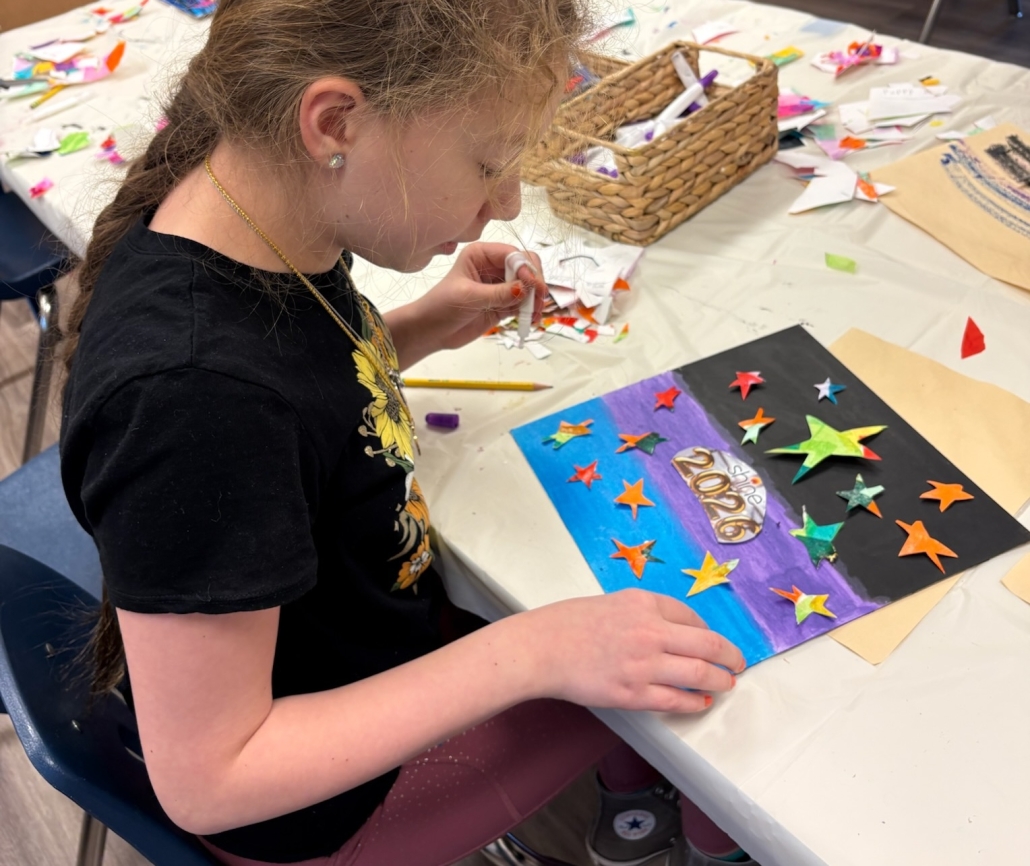
Shine supports your family’s journey by introducing enriching, playful learning experiences that naturally foster growth. From hands-on art workshops and Little Luminaries language classes to customized day camps and theatre programming, Shine helps kids — and the families around them — discover, create, and reconnect with their inner light.
Resets like this let your kids — and you — learn, play, and reconnect at a comfortable pace, rather than chasing perfection or bigger changes.



 New York, NY 10036


